A rancher tasted his late wife's secret recipe in his own dark kitchen, and the stranger at his stove was holding a letter that would change everything. For seven years he had believed his beloved died full of regret, but one weathered page showed him her love had outlasted the grave.
A bitter autumn wind came raking across the Kansas prairie, and Harlan Voss felt it in his bones as he led his tired horse toward the dark barn.
Seven lonely winters had passed since his Margaret died. In all that time the ranch house had been little more than a hollow shelter full of shadows and dust. He lived on scorched coffee and stale hardtack, let the hearth go cold, and let the silence press against the timber walls.
Tonight, when he pushed open the back door, something impossible stopped him cold in the middle of the hallway. The smell of simmering beef stew, fresh yeast bread, and wild rosemary was drifting out of the kitchen like a ghost from happier years.
He stepped past the pantry door and found the kitchen glowing gold in the light of three freshly trimmed kerosene lanterns. A young woman of about twenty-four stood at the iron stove, her chestnut hair in a loose braid and flour smudged across her apron.
“So,” she said softly, her clear gray eyes patient on his weathered face, “you've finally come home, Mr. Voss.”
“Who are you?” His voice came out rough and wavering from years of going unused. “And why are you cooking at my late wife's stove?”
She laid the iron spoon down. “My name is Elinor Pike. I came to pay back an old debt of mercy.”
He picked up a wooden spoon and lifted a single taste of the rich broth to his lips. Then he shut his eyes against the sudden sting of tears. Sweet summer carrots, cracked black pepper, and crushed wild rosemary: it tasted exactly like the suppers Margaret used to make. Nobody else in the county had ever known her secret blend of wild ridge herbs. She had guarded that receipt with tender pride.
“Who taught you to season a broth this way?” His voice was thick with a feeling he had buried for nearly a decade.
Elinor reached into the deep pocket of her faded calico apron and drew out a carefully folded sheet of yellowed paper. Harlan knew the elegant, looping script before it was even half unfolded in the lantern light.
“Your wife wrote the answer herself,” she whispered, holding the fragile page out to his trembling, calloused fingers.
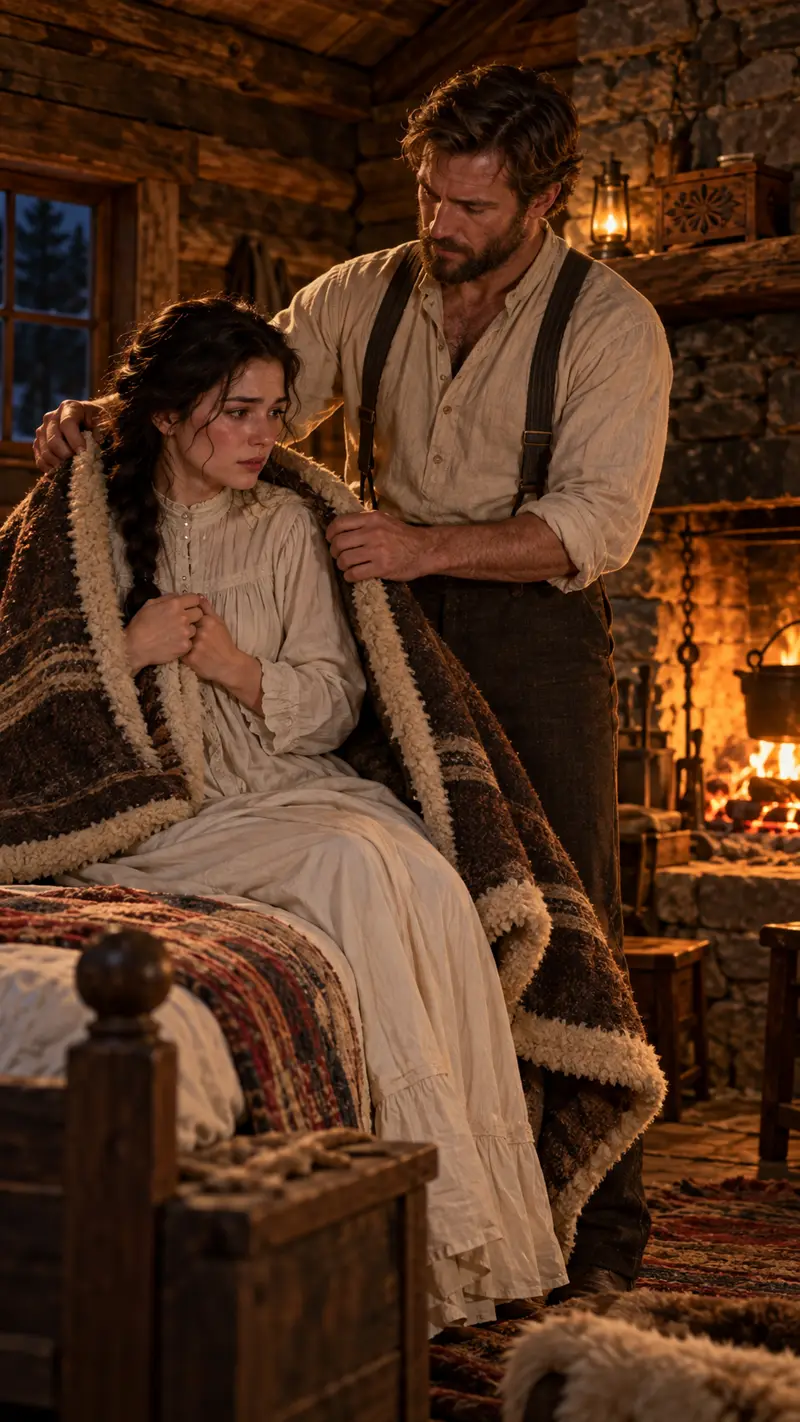
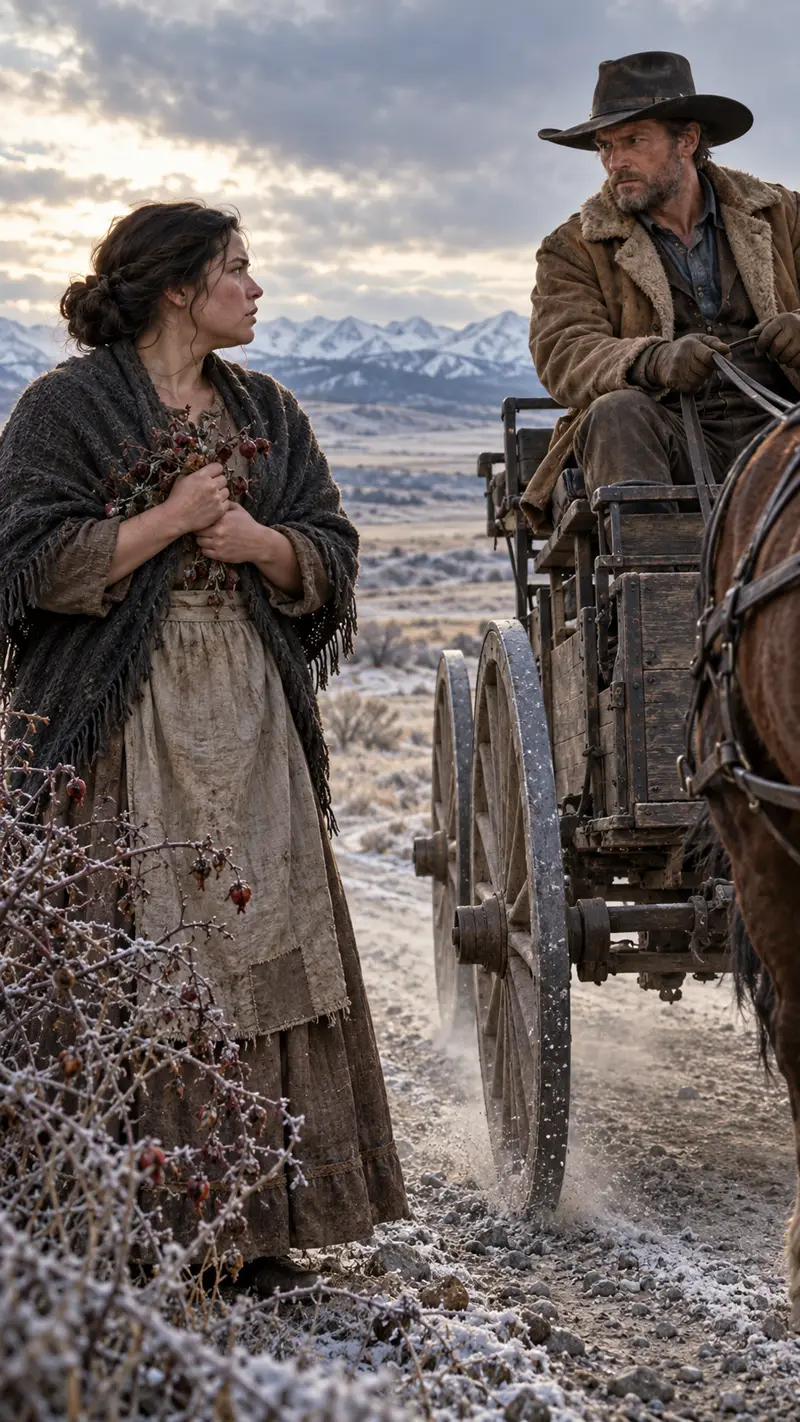
The letter was addressed to a woman named Martha Pike and dated in the brutal blizzard of seventeen winters past. A flood of long-buried memories broke through the guard around Harlan's heart. He remembered the howling white gale that had nearly swallowed their homestead whole. That terrible December he had ridden out into the blinding drifts to look for strayed heifers and found a broken wagon abandoned on the north trail. Inside the snow-filled box huddled a half-frozen widow and a shivering four-year-old, both sliding toward the fatal sleep of the prairie frost. He had carried them on his saddle through the storm and into Margaret's blazing kitchen just as their strength gave out. Margaret wrapped them in thick wool quilts, rubbed their numb fingers with tallow, and fed them hot rosemary stew until color came back to their cheeks.
“You were that little girl,” he murmured, raising his eyes from the page to Elinor's calm, resolute face.
She nodded. “My mother never forgot the woman who saved us from freezing on an unmarked trail. Before she died last month, she made me swear a promise on the family Bible beside her bed.” She drew a slow breath. “She said Margaret Voss gave us our lives, and I must come back to this valley and repay the gift.”
Harlan looked down at the steaming pot. A strange warmth was thawing the deep winter inside him.
“Your mother was a good woman,” he said quietly. “But you shouldn't have crossed two territories just to bake bread for an old recluse.”
“I didn't come only to bake bread, Mr. Voss.” Her voice was clear and firm. “I came because Mrs. Voss knew a day would arrive when you'd need to hear the truth from beyond this world.”
He pulled out a heavy wooden chair and sank into it, shoulders bowing under the weight of years of unspoken pain.
“For seven years I've carried a stone in my chest,” he confessed, unable to take his eyes off Margaret's familiar writing. He looked up at Elinor. “I took her away from her comfortable home in Ohio and brought her out to this unforgiving wilderness. When the prairie fever got hold of her, there was no doctor within fifty miles to ease her breathing or cool her burning skin.” Every night since the funeral he had believed she died regretting the day she put her hand in his.
“Read the second paragraph,” Elinor said gently. She stepped closer and rested a comforting hand near his on the scrubbed pine table.
He settled his spectacles on his nose and followed Margaret's lines while the lantern flame shivered against the black windowpane.
“Dear Martha,” Margaret had written, “if my beloved Harlan is ever left alone beneath this wide sky, he will blame himself for every tear I ever shed. He will not see that every board in this house was shaped by his devotion, and that my years as his wife were the sweetest heaven God ever gave me.”
The tears came unchecked now, running down the deep furrows of his sunburnt cheeks and washing away seven bitter years of self-punishment. Elinor poured him a cup of steaming black coffee and sat across from him, giving the old rancher time to take in his wife's loving absolution.
“My mother got that letter six months before Margaret went to sleep for the last time,” she said quietly. “She kept something else for you, too.” She reached under the shawl on the side bench and brought out a thick envelope tied with red hemp twine and sealed with the wax stamp of the territorial land commissioner.
“When I stepped off the stagecoach in Willow Creek yesterday, the whole livery stable was talking about your ranch,” she said. Silas Vance, the richest cattle baron in the territory, had filed an abandonment petition against the Voss valley water rights. He had spread word that Harlan had lost his mind to grief, that the house sat empty, and that the original land patent had burned in the township fire. Harlan had refused to speak to anyone in town for years, so the territorial judge had granted Vance a conditional eviction order, to be served in the morning.
Vance owned the downstream pastures. Without the spring that ran across Harlan's ridge, though, his growing herd would die in the summer droughts. Harlan had been too numb with sorrow to defend his boundaries, and every season Vance's fence riders had crept farther into his timberline.
“Silas Vance thinks I'm a broken old hermit who'll sign anything to be left in peace,” Harlan said, and some of his old pride stirred in his chest.
“He's counting on you having no proof of ownership.” Elinor slid the thick envelope across the pine boards.
Harlan cracked the brittle seal and drew out a sheaf of legal papers. His eyes widened. On top lay the original territorial patent for six hundred fertile acres, signed by the governor himself twenty-two years before. Beneath it were tax receipts stamped year after year and a handwritten ledger listing every improvement he had ever made to the land.
“How did your mother come to have these?” he asked, staring at the spotless paper that could save his homestead.
Seventeen years ago, Elinor explained, Margaret had realized the wooden town courthouse would not survive a prairie wildfire. When Martha Pike left for the western valley, Margaret trusted her with duplicates of every deed, bill of sale, and water easement Harlan owned. She paid the recording fees through the territorial capital by bank draft, and she wanted the copies kept in the Pike family lockbox so no grasping neighbor could ever steal what Harlan had worked for. She had also lent Martha fifty dollars from her egg money to buy a milk cow and start a small dairy in the foothills.
“That fifty dollars grew for seventeen years,” Elinor said with a proud, affectionate smile. It let Martha raise her in comfort, teach her letters, and make a respectable living. Between the yellowed deeds in the envelope lay five crisp twenty-dollar gold notes, Martha Pike's final repayment to the Voss estate.
“Margaret didn't only save my mother's life that freezing night,” Elinor said, her voice rich with gratitude. “She built the foundation for my whole future.”
Harlan touched the crisp notes and the pristine deed. He felt the enormous weight of his wife's wisdom reaching across time. Margaret had never doubted his courage. She had only known that grief would blind him, and so she had raised a fortress of love to guard him from far away.
“I'd given up on this valley, Elinor,” he admitted, looking around at the sturdy walls he had raised log by log.
“You gave up because you thought you were alone,” she answered. She went to the stove and ladled up a big bowl, then set it before him with a thick slice of fresh bread spread with sweet churned butter. “Eat your supper, Mr. Voss. Tomorrow morning you'll stand on your porch as the true master of this ranch.”
He picked up his spoon and ate, savoring each tender piece of beef, each drop of broth, each crumb of warm, fragrant bread. With every mouthful the cold numbness that had gripped him for seven years drew back like winter snow under a summer sun. For the first time since Margaret died, the house felt like a sanctuary of living hope instead of a tomb of withered memories.
That night Elinor slept in the guest room Margaret had once kept ready for passing travelers, and Harlan kept watch by the roaring hearth. He spent the dark hours cleaning his boots, trimming his beard, and reading Margaret's letter until he knew every word by heart. When the first gray streaks of dawn lit the eastern prairie, he was no longer a broken hermit waiting for death to find him.
The morning sun climbed bright and crisp over the yellow grass and threw long shadows across the front yard. Then came the sound of trotting hooves. Silas Vance rolled up the drive in a polished buggy, flanked by two pasture riders and the county surveyor, who carried a rolled linen map. Vance climbed down, straightened his tailored wool coat, and smoothed his mustache with the easy arrogance of a man who expected no trouble. He held a packet of eviction papers and meant to nail the notice to the front door and drive Harlan off the ridge before noon.
He had not taken two steps toward the porch when the heavy oak door swung wide and caught him flat-footed.
Harlan stepped out onto the veranda in a clean wool shirt and a polished leather vest, his broad-brimmed Stetson squared over his brow. His eyes were clear and his back straight, and the quiet dignity in his face drew instant respect from the surveyor and the two hands.
“Good morning, Silas,” he said, his voice rolling across the yard like prairie thunder.
Vance blinked. He had expected to find a trembling, half-starved old wretch hiding in a filthy kitchen.
“Harlan.” He cleared his throat and held up his paperwork. “The territorial court has declared this valley abandoned, for lack of a deed and unpaid regional water levies. I hold the order granting my company possession of the spring, and I've brought the surveyor to mark my new boundary lines.”
Harlan did not raise his voice or show anger. He only stepped aside and waved Elinor Pike out onto the sunlit porch. She came forward carrying the county envelope, her chestnut braid shining in the sun, plainly untroubled by Vance's imposing presence.
“You're misinformed, Silas,” Harlan said calmly, resting a weathered hand on the porch rail.
Elinor handed the territorial documents straight to the young surveyor. His eyes grew round as he studied the embossed seal of the governor.
“This is the original territorial patent, Mr. Vance,” he stammered, looking up from the parchment in shock. “It carries a permanent federal exemption for the Voss family, and every water right is deeded in perpetuity.”
Elinor opened the ledger to show the official tax stamps, filed in the territorial capital every single year without a gap.
“The Voss ranch has never been abandoned for a single hour,” she said, her voice carrying across the whole yard. “Every obligation has been paid in gold, and any attempt to cross these fences will be criminal trespass under territorial law.”
Vance's face went scarlet with fury and embarrassment, while his own riders traded uneasy glances behind him. He snatched the papers and studied the signatures. They could not be argued with. His grand land grab had collapsed into humiliation.
“You kept this quiet for seven years, Harlan,” he hissed through clenched teeth, crushing his useless petition into a ball.
“A wise man doesn't boast about his treasures, Silas,” Harlan answered with quiet, unshakable authority. “He just protects what God and honest labor gave him.”
Vance said nothing more. He climbed back into his buggy, jerked the reins hard, and rattled off down the dusty road with his subdued riders trailing after him.
As the dust cloud settled over the northern ridge, a deep and joyful silence came down over the porch. Harlan turned to Elinor with a peace in his heart he had never expected to feel again.
“You've saved my life twice over, Elinor,” he said, his voice trembling as he held out his hand.
“Your wife saved my family first, Mr. Voss.” She took his weathered hand between her own young, capable ones.
He gazed across the rolling prairie, where the golden autumn light fell over the endless acres Margaret had loved with all her soul.
“My mother taught me to run a dairy and churn the finest butter in the territory,” Elinor said, looking toward the sturdy empty barn. She smiled shyly. “I've no family left in the west, and this valley feels more like home than anywhere I've ever been.”
His eyes shone as he understood that Margaret had not only saved his land. She had sent him a daughter to share his hearth.
“Then you'll stay, Elinor,” he said, with a broad, honest smile that wiped decades of sorrow from his weathered face. “We'll bring milk cows to the north pasture and plant new herbs by the creek, and this kitchen will never go cold or quiet again.”
They walked back together into the bright, warm house, where a golden loaf and a pot of steaming stew waited on the scrubbed table. Through the open window, the sweet scent of wild rosemary drifted in on the mountain breeze, whispering that love remembered is never truly lost.