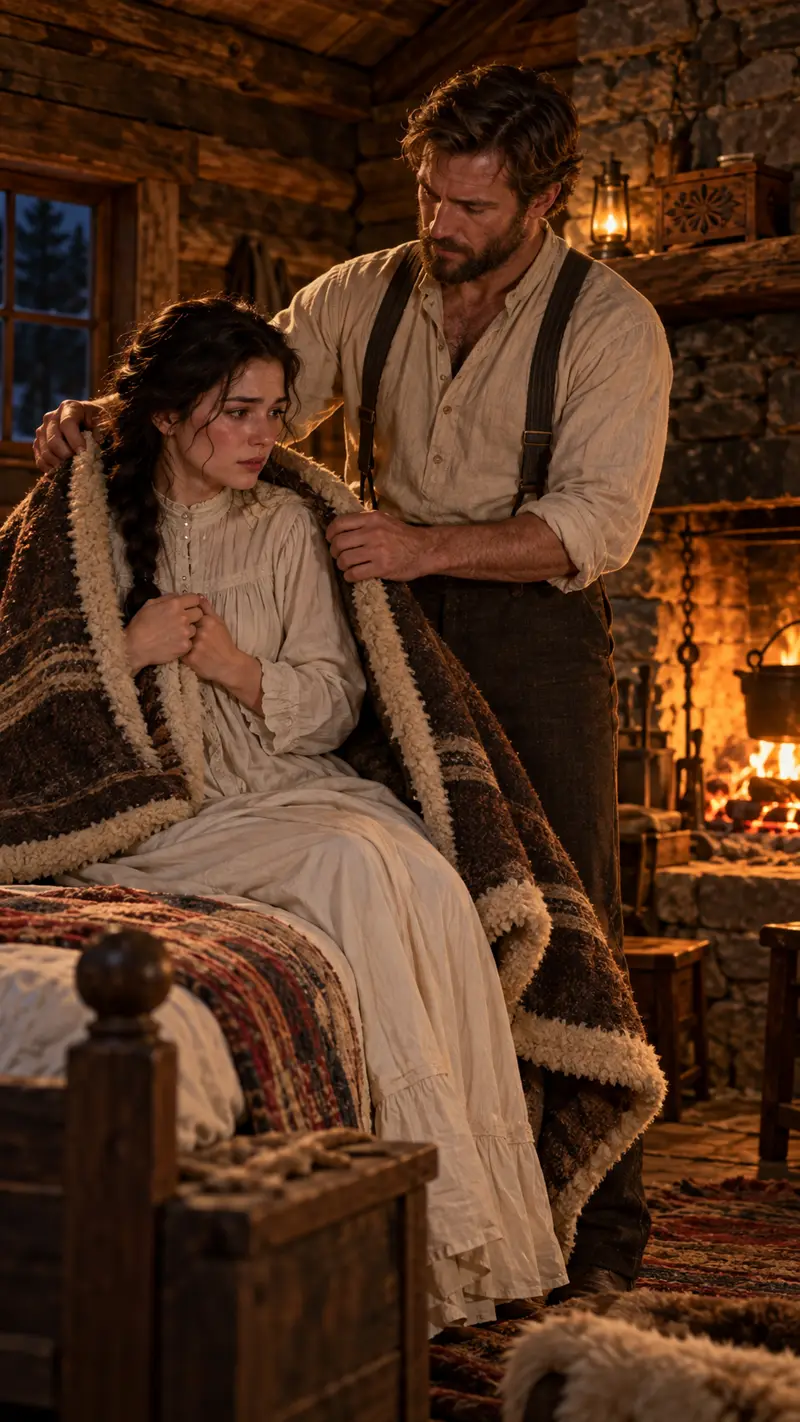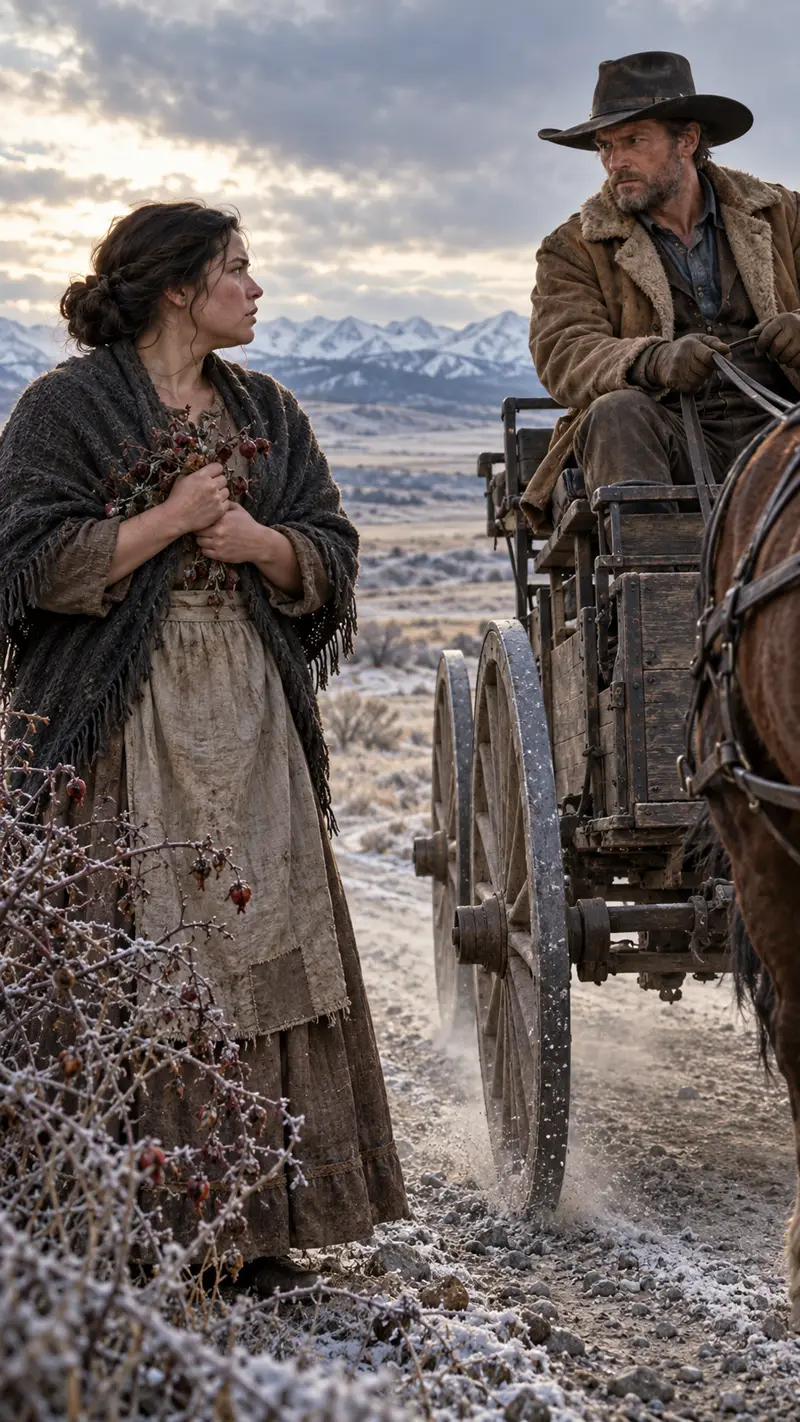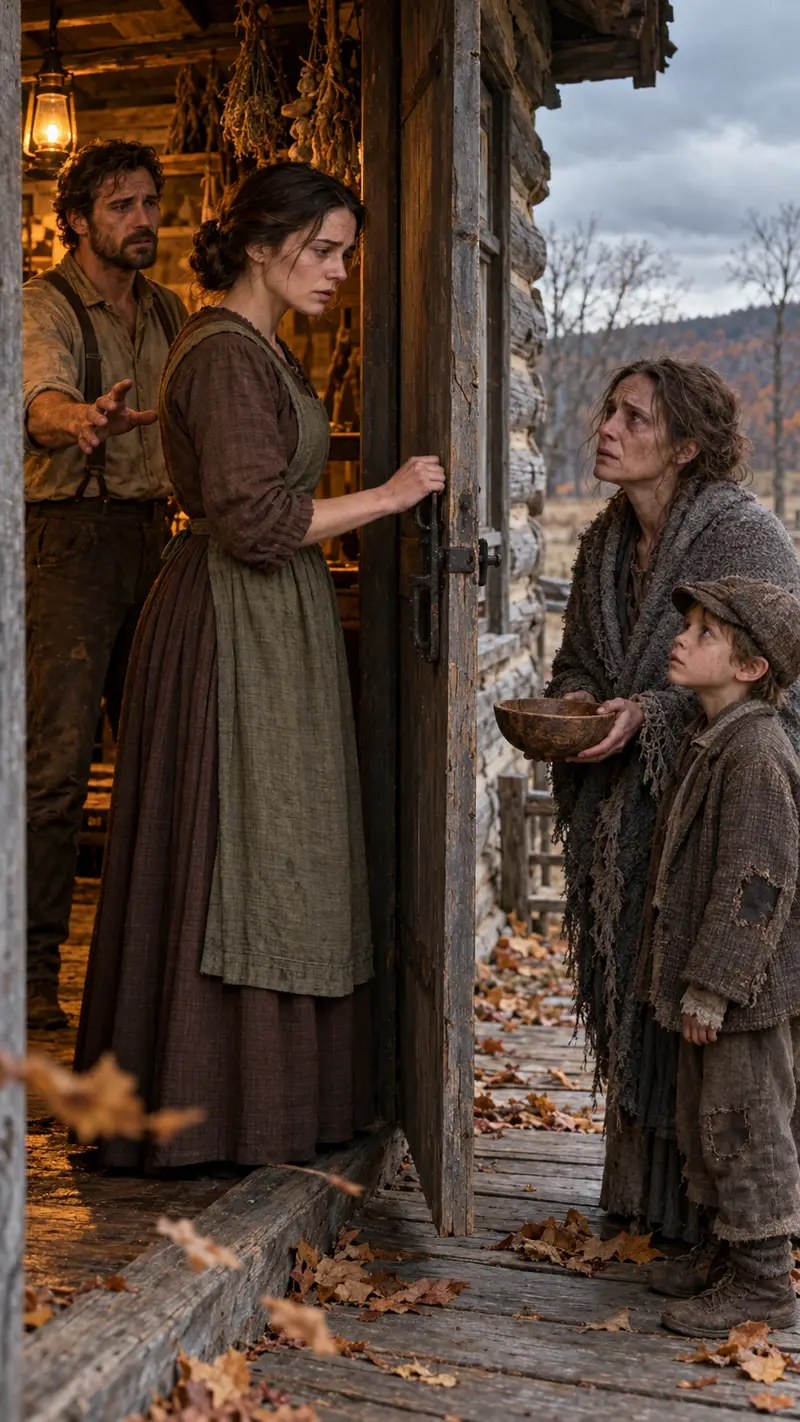
The smell of warm prairie bread drew a wealthy rancher over the hills to a lonely dugout, where an orphaned woman lived apart from everyone. Under the sod roof of that forgotten hollow, he found something that would change both their lives.
Gideon Pike filled the low timber doorframe of the earthen house, his tall shape blotting out the bright afternoon sun. In one weathered hand he held a half-eaten loaf of dark bread in brown paper that crackled in the quiet.
Eliza Wren stayed where she was at her scrubbed table, flour-dusted fingers pressed flat against the faded calico of her apron. For three lonely seasons the townspeople had thought of her home as a curious mound of dirt where an orphan girl hid. Now the most prosperous cattleman in the territory stood at her door with prairie dust on his coat and questions in his dark eyes that she could not read.
“I rode into the mercantile and asked Mr. Bell who baked this bread,” Gideon said, his deep voice filling the room.
Eliza swallowed against a sudden tightness in her throat. Her heart fluttered like a sparrow caught in a wicker basket.
“I baked that loaf before dawn broke over the high grass, Mr. Pike,” she answered softly, lifting her chin. “I measured the coarse grain by lamplight, kneaded the heavy dough, and pulled it from that brick oven with my own hands.”
Slowly Gideon took off his wide-brimmed felt hat. His eyes held none of the sharp curiosity she had braced for.
“My mother baked bread with a faint sweetness of wild clover to it,” he said. “She died in our lonely cabin years ago. Since that bitter winter, every loaf I've bought in town has tasted of hurried flour and chalky lime, and left me hungry.”
Eliza looked at the torn paper in his palm. The plain sorrow on his weathered face surprised her.
“My mother taught me never to rush dough,” she said, “especially when the hot Nebraska wind blows dry and harsh. Force the rising before the wild yeast is ready and you get a brittle crust with nothing in it to feed a person.”
Gideon nodded and let his gaze wander over the small, tidy dugout, with its scrubbed pine shelves and iron pans. There was no fine parlor furniture, but the room felt deeply welcoming, warm with the scent of toasted wheat and cedar smoke.
“I've got twenty hungry cowhands working the summer pastures,” he said quietly, “and a huge ranch house with empty rooms that rattle. I want forty fresh loaves from your oven every Tuesday morning, and I'll pay double what they charge in town.”
The sum he named would buy sacks of white flour, warm winter wool and sturdy panes of glass. Still, Eliza hesitated. The sting of town whispers rose like bitter smoke to guard the fragile independence she had worked so hard to win.
“I'm an honest working baker, Mr. Pike, not a charity case for a wealthy cattleman who wants to ease his conscience.”
A rare, subtle smile touched the corner of Gideon's mouth and softened the stern lines of his jaw that kept others at a distance.
“There's no charity in buying good bread, and no pity in paying an industrious woman what her patient craft is worth.”
She looked down at her hands and felt the steady warmth coming off the brick oven she had built stone by stone.
“Then we have an honest agreement, Mr. Pike, so long as you send a wagon driver to collect the hampers at the crossing.”
Gideon put his hat back on and met her gray eyes. His voice carried a resolve that warmed the room.
“No hired hand will ever touch these loaves,” he told her, in a tone that allowed no argument. “I'll ride out to this hollow myself every Tuesday, just as the first light clears the ridge.”
After his tall horse carried him off across the golden grass, Eliza stayed in her doorway and watched the dust settle back into the earth. That evening, tending the glowing coals, she watched orange sparks drift up the sod chimney into the vast starry sky. For the first time since fever took her beloved parents, her small earthen room did not feel so cold or abandoned.
Gideon came the next Tuesday just as the dawn dew began to lift off the buffalo grass in a silver mist. He did not simply load the linen-lined baskets and hurry back to the ranch with the warm, fragrant bread. He swung down from his saddle with an armload of seasoned cedar logs and stacked them beside her clay hearth.
“Dry cedar gives an even, lasting heat without the heavy gray ash that can ruin your baking stones,” he said, brushing off his sleeves.
Eliza poured cold well water from her earthenware jug into a clean tin mug and handed it over with a gentle smile. Gideon drank thirstily, leaning against a timber post while she knotted rough twine around the last woven hamper.
“My foreman told the boys yesterday that bread like this makes a tired man remember why he works from dawn to dusk.”
Warmth rose in Eliza's cheeks, and for a fleeting moment her guarded gray eyes sparkled in a way that changed her whole face.
“Good food ought to remind us that our daily work is a quiet blessing and not just an endless burden.”
Week after week the Tuesday visits stretched by minutes nobody counted, drifting away under the wide blue sky. Gideon told her about cattle drives across wide rivers, sudden plains blizzards, and the quiet weight of keeping fifty ranch families fed. Eliza told him how meadowlarks marked the turning of the seasons and how the deep clay kept her dugout cool through the blistering summers. In that quiet hollow where the town seldom walked, two solitary souls were slowly learning to trust each other.
Gideon came to admire her steady strength and marveled at the poise she carried with so little in the way of worldly goods. Eliza caught herself standing in her open doorway on Monday evenings, listening across the darkening plains for the sound of his horse.
But in a small frontier settlement like Willow Creek, where every wagon track was noticed, regular visits could not stay secret. At the mercantile counter, people remarked that the territory's most eligible bachelor no longer showed up at the lively Saturday socials. Clara Finch, the bank president's fashionable daughter, had spent two full seasons trying to win Gideon's attention in fine silk dresses. When the whispers reached her that Gideon rode to the creek hollow every week, her polished society manners turned icy.
One sweltering Thursday, when the prairie heat shimmered like molten glass, an ornate carriage rolled out beyond the edge of town. Eliza stepped out of her shaded doorway in surprise as Clara climbed down into the dust in pale blue satin. Mrs. Dyer came with her, holding a black parasol and surveying the earthen hillside with barely hidden disapproval.
“We brought you some calico remnants and coarse cornmeal we had no use for, Eliza,” Clara began, her melodic voice dripping with sweet, condescending pity. “It must be simply miserable, living like a burrowing creature under the mud and getting by on the gentlemanly charity of Mr. Pike.”
Eliza stood straight before them. Her voice stayed calm and remarkably steady, though indignation flushed hot through her chest.
“I have never sought or accepted charity from anyone, Miss Finch. And my roof keeps out the rain just fine.”
Clara gave an airy, artificial laugh, like shards of glass clattering on dry sandstone in the hot wind.
“Mr. Pike is only indulging a whim of frontier goodwill. But a respected rancher of his influence can't keep calling at a hole in the ground. The sprawling Double P needs a refined lady to preside over its parlor, not an orphan who smells of sour yeast.”
“Think of his standing across this county, child,” Mrs. Dyer added self-righteously, “before you let yourself harbor foolish dreams.”
They dropped the bundle of cast-off cloth on the parched grass, climbed back into their carriage and turned toward town. Eliza didn't move from her clay threshold until the dust from the wheels had melted into the shimmering horizon. Every unfeeling word had found its mark, sinking into the tender places where hope and quiet affection had just begun to grow. She looked down at her flour-stained apron and rough clay walls and felt the sting of the town's cruel, unspoken judgment.
On Tuesday morning Gideon rode down the hillside trail with a basket of ripe wild plums in his saddlebag. To his bewilderment, the thick cedar door was barred from the inside, and the little dugout was silent as stone. On the bench outside sat forty fresh loaves, and beside them the leather pouch holding every silver dollar he had paid her.
He was out of the saddle in an instant, boots thudding across the sunbaked ground until he stood before her shuttered door.
“Eliza, what's happened? Why have you barred this door against me on such a clear morning? Lift the latch so we can talk the way we always do. I won't just take these hampers.”
“Take the bread you ordered, Mr. Pike,” she called from inside, her voice painfully far away, flat and hollow. “Take the silver too. After this morning I won't be baking for the Double P anymore.”
Gideon laid his palm against the rough grain of the cedar, and his chest tightened with sudden sorrow.
“Why are you talking to me like a stranger after all those weeks of trust and laughter by this hearth? If someone from Willow Creek rode out here to trouble your peace or question your good name, tell me who.”
“Nobody told me any lies, Mr. Pike,” Eliza answered through the wood. Her voice wavered, then steadied into quiet composure. “You belong among the grand houses and polished furniture and respectable families in town. My place is here beneath the grass. Please ride back to your estate and don't return. I will never accept an arrangement that was born of pity.”
Gideon stood in the suffocating heat of the morning sun for a long while, jaw clamped shut. He would not touch the pouch of silver. He took only the wicker baskets and rode slowly away, heavy with sorrow.
Over the next three weeks a brutal summer drought settled on the plains, baking the tall switchgrass into brittle, crackling tinder. Each evening Gideon sat alone in his cavernous dining hall, his plate untouched, while the empty house echoed around him. Out in the hollow Eliza kneaded her dough in total isolation, and the peaceful solace that once sustained her was gone.
On the last sweltering Friday of the month, the afternoon sky turned a sickly copper and dry lightning flickered silently overhead. The scorching gale held no trace of moisture, only suffocating gusts that howled over the pastures. A bolt struck a dead cottonwood on the high ridge, and the brittle brush burst into bright orange flame. Driven by the ferocious wind, thick black smoke rolled in terrifying clouds straight toward the sunken creek hollow below.
On the veranda of his ranch house, miles away, Gideon saw a dark plume climbing toward the sky. He did not stop to call his hands. He leaped onto his fastest horse and drove it into a desperate gallop.
In the hollow, Eliza was hauling heavy tin buckets of water from the dwindling creek and soaking her dry sod roof. Gray smoke swirled around her home, searing her lungs and blurring her sight, as glowing embers drifted toward her kindling. Just as her strength began to give out in the choking haze, the frantic drumming of hooves broke through the wind.
Gideon threw himself from the saddle before his horse had stopped, flung aside his coat and ran for the dugout. He snatched an iron spade from her kindling stack and worked with furious strength, hurling heavy heaps of damp soil over the embers. Shoulder to shoulder in the fierce heat, they turned the earth until the creeping line of sparks met the rocky creek.
When the danger had passed, they both sank onto the soot-stained ground and drew ragged breaths under the hazy sky. Eliza sat with her shoulders shaking, soot smudged across her cheeks and tears tracing pale paths through the grime.
“Why did you risk your life riding through that smoke, Gideon?” she whispered, using his given name with unguarded tenderness. “I told you there's nothing of value here. Nothing worth saving except dry sod and an earthen oven.”
With infinite gentleness, Gideon cupped her chin in his calloused, dust-covered hand and lifted her face until their eyes met.
“You are the only person who truly matters to me in this whole boundless country, Eliza Wren,” he said, his voice raw. “Do you really think I rode out to this hillside every Tuesday just to buy bread? Or out of foolish pity?”
He reached into the pocket of his soot-dusted vest and drew out a worn leather folder, then carefully unfolded a yellowed slip of paper.
“Ten years ago, in the terrible blizzard that paralyzed this whole territory, my family was snowbound in our cabin. My mother was gravely ill, our winter stores had spoiled, and we had neither warmth nor hope left in that lonely house. A stranger came out of the blinding drifts on foot and left us wild sourdough starter and three warm loaves.”
Eliza caught her breath, eyes widening. She recognized the neat, distinctive handwriting across the aged page.
“That kind man stayed two full days splitting firewood to keep our cabin warm. Before he left, he wrote on this paper.”
Gideon held it closer so she could read the steady, familiar penmanship of her beloved late father, Thomas Wren. “He wrote, ‘Bread is the quiet mercy of heaven passed through patient hands, and it will unfailingly return to those who need it.’”
His eyes shone with emotion as the memory of that long-ago rescue showed through the afternoon haze.
“My mother guarded that crock of starter until her last breath,” he whispered, “and made me promise never to forget the grace that saved us. The moment I tasted your bread on Mr. Bell's counter, I knew that wild-yeast sweetness. It was the same recipe, the same patience, the same generous spirit that kept my family alive all those years ago.”
Eliza wept openly now, pressing her trembling hands to her heart as the whole breathtaking truth of her father's legacy unfolded. Through all those lonely, exhausting months of working alone in the earth, she had believed herself forgotten and unloved. She had never imagined that the crock of starter her father left her would be the sacred thread tying her to Gideon.
“Your father saved my family years ago, Eliza, and ever since the day I met you, you've saved me from loneliness.”
He took both her flour-worn, trembling hands in his strong grasp and knelt, unashamed, on the blackened earth beside her threshold.
“I didn't come to you out of pity or patronizing charity. I came to ask if you'd share your life with me. My house has stood silent, cold and empty for ten years, waiting for the one woman whose radiant soul could bring it light.”
Eliza looked toward the modest sod dugout that had sheltered her grief and felt every lingering shadow of loneliness melt away on the wind.
“I'll come with you, Gideon,” she said softly, her heart resting at last in the sweet, unwavering certainty of his love. “I'll carry my father's starter to your ranch house and build a brick oven at your hearth that will never grow cold.”
Gideon drew her gently into his arms and held her close as soft evening light washed over the grasslands. Together they walked away from the quiet hillside toward their new tomorrow, leaving all sorrow behind in the warm Nebraska earth.