Everyone in the valley had a good laugh when Miriam Hale stuffed her apron with river weeds instead of fussing over prize vegetables. Then winter came early, and nobody was laughing. Those bitter wild roots were all that stood between Ash Hollow and starvation.
Wind off the hills rattled the cedar shingles that autumn night. Miriam kept one calloused hand pressed on the iron latch of her front door. Behind her stood Caleb, his boots still caked with dust from the ruined garden rows, his forehead creased with a dread he could not put into words.
“If you open that door tonight, Miriam, we'll have an empty pantry long before winter lets go of us.”
Through the glass pane she could see Martha Tolland huddled on the step, clutching two shivering children under a threadbare wool shawl. Three weeks earlier that same woman had mocked Miriam along the boardwalk. Now she trembled in the dusk, holding an empty basket.
Miriam knew what hung in her own rafters. Every dry bundle of lamb's quarters and chickweed was a long, lonely day spent along the riverbank. But she could not look past young Thomas Tolland, whose hollow cheeks told of days of gnawing hunger since the beetles ate their harvest. The little boy reached toward the dark cabin door and wept quietly into his sister's frayed apron.
Miriam stopped hesitating. She lifted the latch and pulled the thick pine door open to the gathering twilight.
“Come in by the hearth, Martha. Bring those cold children right over to the stove. There's hot broth waiting.”
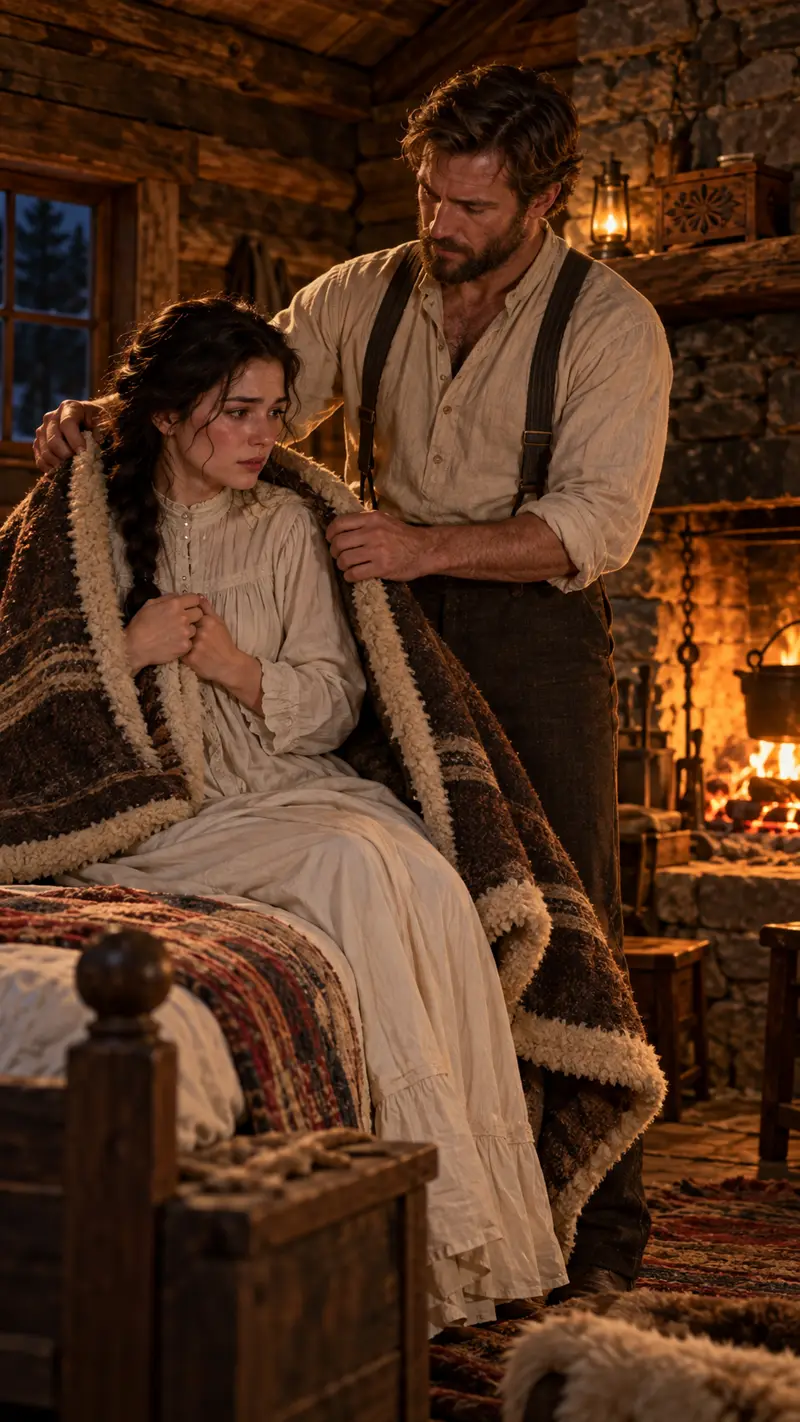
Mrs. Tolland crossed the threshold slowly, head bent so her bonnet would hide her hot, ashamed tears.
“I laughed at your baskets of weeds all summer, Miriam, and here I am begging for the very thing I scorned.”
Miriam took the empty woven basket from her trembling hands and set it down gently on the sturdy pine table.
“Hunger has no use for pride, Martha. And wild river plants don't care who sneered at them while they grew in the creek mud.”
Caleb said nothing. He watched his wife ladle steaming broth, made from dandelion roots and watercress, into three deep clay bowls. The children gulped it down so fast their wooden spoons scraped the glaze, and they kept scraping until the bowls were bare.
Past the frosted window, Miriam spotted more lanterns bobbing in the dark, carried by families too desperate to wait for morning. The news had run through Ash Hollow like a brush fire: the quiet Hale homestead held the last wholesome green food in the valley.
It had all started in August, when tiny black beetles swarmed the settlement. They bred by the thousands under the lush leaves of every tidy garden. In three days the proud cabbage heads, the thriving bean vines and the potato plants were chewed down to dry, hollow stems. Families sprinkled wood ash, burned brush and flooded their plots with water, yet nothing slowed the pests. Caleb had walked his bare furrows with hollow eyes, grieving over vegetables he had hoed from dawn to dusk all summer.
Down on the wild creek banks, though, the weeds stood tall and untouched, spared by their bitter sap. Miriam had spent months drying those leafy stalks beside her chimney and filling burlap sacks while the neighbors traded gossip over garden fences. Now those sacks meant the difference between life and cold despair for settlers who had stored nothing for the winter.
Martha swallowed a spoonful of warm broth. Tears cut pale tracks through the dust on her tired cheeks, and she whispered her thanks.
Before the Tolland children had finished eating, another knock rattled the cedar frame, and voices murmured anxiously outside. John Miller stood on the porch steps with his young wife, who was expecting, both of them wrapped in patchwork blankets against the northern gale. Behind them came the blacksmith and his aged mother, eyes wide with fear as the wind howled.
Miriam welcomed each neighbor in. She turned away no one whose cupboards were bare. Into their hands went bundles of dried chickweed, packets of wild dock leaves and jars of preserved cattail and watercress roots. Every family left clutching its small parcel like treasure, whispering blessings as it slipped back into the autumn dark.
By midnight the line of weeping mothers and humbled farmers had thinned to nothing, and the little cabin was quiet and bitterly cold. Caleb shot the iron bolt, turned slowly, and stared at the wide pine shelves of their pantry.
“We gave away more than half our winter supplies in a single evening, Miriam.” His voice shook.
She crossed to the corner and drew weary fingers along the bare shelves. Only three small stoneware crocks were left. He was right. What remained would barely feed the two of them for a fortnight.
“The jars are nearly empty, Caleb. But the wild ground around us hasn't given up everything it has to offer.”
Caleb shook his head, unable to see how any family could last a mountain winter on bitter creek weeds.
Quietly Miriam went to the cedar trunk beneath the front window and lifted its brass hasp with steady hands. From under a thick woolen coverlet she drew out a worn leather journal, its pages yellowed by decades of frontier living. Caleb leaned in as the golden lamplight fell on delicate charcoal sketches of strange roots, serrated marsh leaves and prickly seed heads.
Her grandmother had crossed the great plains forty years earlier and lived through an early winter that killed many pioneer families nearby.
“Grandmother survived because she learned that the river bottom feeds better than any pampered garden,” Miriam said softly.
Caleb studied the detailed drawing of a tall wetland reed whose dense brown tops swayed in every marsh across the territory.
“You honestly think sensible men can keep their children alive by digging up common rushes out of freezing mud?” he asked.
“The underground roots of the river cattail give flour as sweet as white wheat once they're dried and ground,” she told him.
She turned the brittle page to the knobby roots of the wild sunflower that grew thick along the limestone ridges. For generations the valley farmers had chopped those stalks down and cursed them as pests that choked the corn. Yet while the tame vegetables withered under the beetles, those deep wild roots stayed packed with sugar and mountain minerals.
“We can't just hand food to anyone who turns up at our door tomorrow,” she said, closing the journal. “If Ash Hollow is going to see spring, every family here has to learn to harvest what they've always trampled.”
At daybreak silver frost lay on the valley floor, and the muddy wagon ruts had frozen into stone-hard ridges. More than thirty frightened settlers waited outside the Hale cabin, their breath rising like gray smoke into the dawn.
Hiram Tolland was among them, a proud man whose sprawling acreage had once grown the finest potatoes in the western valley. He climbed onto the frosty porch planks and held out an engraved gold watch in his shaking palm.
“Take this, Caleb. It's solid gold. Give my household whatever dried roots you've got hidden in there,” he pleaded.
Caleb remembered how loudly Hiram had laughed outside the general store when Miriam carried home her baskets of creek leaves. Before he could answer, Miriam stepped out onto the cold porch and quietly, with dignity, pushed Hiram's outstretched hand away.
“Keep your gold, Hiram. Nobody in Ash Hollow is going to buy food from this cabin today.”
A gasp of despair swept the crowd. Mothers pulled their weeping little ones close against the wind.
“Our own pantry holds only a few days' worth of dried leaves,” Miriam went on. “If we share what's left, we'll only starve together.”
Hiram's tall frame sagged, as if the last pillar of hope had cracked. “Then what's left for our children when snow seals the canyon passes and the cupboards are bare?” he whispered.
Miriam shouldered an iron spade, hooked a large willow basket over her arm and pointed to the river winding below.
“Get your shovels, your pitchforks and your empty flour sacks. This morning you're going to learn where real food hides.”
The bewildered settlers hurried to their barns and came back with rusty spades, iron forks and bundles of empty canvas. Miriam led the silent line down the footpath to the broad river shallows, where tall brown cattails rippled in the wind. For decades the farmers had shunned that marsh as a swamp fit only for ducks and frogs.
Without a flicker of fear she waded into the freezing water, cracking the thin morning ice with the heel of her work boot. She drove her spade deep into the dark mud and pried up a dense tangle of pale roots. In the swift current she rinsed off the black silt and held a thick, clean white root high for the crowd to see.
“There's pure white starch in these. Dried, they make flour as fine as anything you'd buy in town,” she announced.
The farmers stared in open disbelief. They had ridden past tons of good food every day of their lives without knowing it.
Caleb stepped down into the icy current beside his wife and plunged his shovel into the silt with fresh energy.
“Don't stand on the bank shivering in your boots!” he called to the men, waving his spade. “Pride won't fill an empty belly this winter. Get in the water and dig before the freeze sets in!”
Hiram Tolland hesitated for only a heartbeat. Then he splashed into the icy creek and sank his bare, calloused hands into the riverbed. Soon twenty men and women were sloshing through the shallows, heaving basket after heavy basket of thick roots into the bright sunlight. The younger children ran laughing along the grassy banks, collecting fluffy brown seed heads to stuff into mattresses and quilts.
By early afternoon Miriam gathered the exhausted group and led them up the steep, rocky trail to the sunny limestone bluffs. She pointed to the dry brown stalks clinging to the gravel slopes and showed them how to know wild autumn sunflowers by their leaves.
“Dig carefully around the base of these stalks and you'll find clusters of sweet tubers in the stony ground,” she said, demonstrating.
Her spade turned up a generous clump of knobby tubers that smelled sweet and earthy in the crisp mountain air.
“These stay crisp through the hardest freezes, and roasted by a hearth they taste like chestnuts.”
Martha Tolland dropped to her knees on the gravelly slope and cleared the dirt from three large, pale tubers with her bare hands.
“All those years we hoed these out of our fence lines,” she whispered, “and never knew they were waiting here to save us.”
Miriam laid a comforting hand on the older woman's shaking shoulder while the afternoon sun turned the granite cliffs to blazing gold.
“We tend to believe that only what we plant has any worth,” she said. “We forget the earth gives freely to those who look with humble eyes.”
They worked together without complaint until every canvas bag bulged with mountain bounty. As twilight settled over the canyon, the weary party tramped back to town with twenty full sacks of food between them.
Nobody scattered to cold homesteads. The whole community gathered in the wide timber meetinghouse beside the old grist mill. The men built a roaring blaze in the great stone fireplace, and welcome heat and crackling light filled the drafty hall. Miriam arranged the long pine workbenches and showed the younger mothers how to scrape the fibrous skins and slice the roots into rounds. Long white slices were spread over clean cotton sheets and set on wooden racks above the hearth.
A rich, roasted smell rose through the hall and pushed out the sour stench of rotted gardens that had hung over Ash Hollow for weeks. That night every settler sat down together to hot roasted tubers, boiled wild greens and hearty broth thickened with seed meal. Children who had cried from hunger for days laughed as they ate their fill, faces glowing in the firelight.
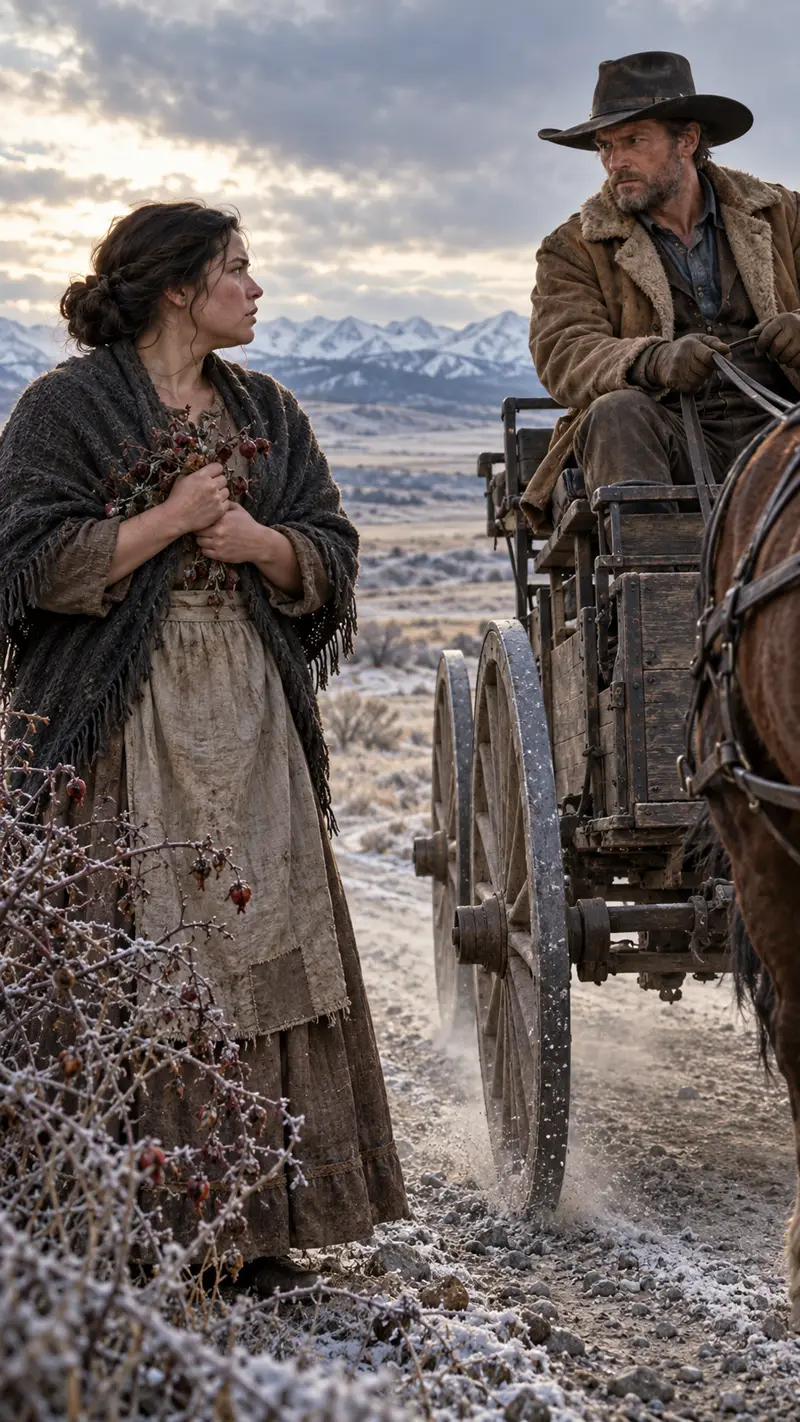
Miriam knew one harvest would not be enough. Northern winters were fierce and could trap the valley until late April. So in the three weeks before the heavy snow, she organized foraging trips into every hidden hollow and pine-covered ridge. They picked baskets of scarlet rose hips from thorny thickets, which she said would keep sickness away through the dark months. They gathered brown seeds from curly dock along the ditches, winnowed off the chaff and ground the grain into hearty meal. In thick work gloves they cut dried nettle leaves for soothing tea that eased coughs and restored strength. Neighbors who had once squabbled over property lines and garden fences now worked side by side, bound by respect and a shared purpose.
In late November a fierce blizzard roared down from the high peaks and buried the valley under five feet of powdery snow. Inside the meetinghouse, the granary bins stood piled high with sacks of root flour, dried greens and sweet tubers. Not one cabin in Ash Hollow ran out of good food, and no child went to bed cold during that storm.
Caleb spent long, peaceful evenings beside Miriam at their own stone fireplace, carving wooden butter paddles while the wind shook the cedar eaves.
“I was a fool by that creek last summer, Miriam,” he confessed softly, folding her rough, work-worn hands into his. “I thought looking after our family meant pulling every wild sprout. I never understood that wisdom means listening to what nature provides.”
Miriam rested her head on his sturdy shoulder and watched golden sparks climb the dark stone chimney into the snowy night.
“A tidy garden row is pleasant to look at, Caleb. But the earth saves its greatest gifts for places no human hand has plowed,” she answered.
By midwinter, freezing winds gripped the territory, and southern settlements that had stored only ordinary garden crops fell into deep hardship. While those distant valleys sent urgent riders hunting for emergency flour, Ash Hollow stayed healthy, peaceful and well fed.
In February a warm thaw melted the lower drifts, and Hiram Tolland walked out to inspect his ruined potato acreage. The plowed loam where he had buried the infested vegetables was swarming with thousands of dormant beetle larvae, waiting for spring. But in the unplowed hedgerows where wild dandelions and chickweed grew thick, the larvae had failed to take hold at all. The oils and bitter roots of the wild plants had cleansed the soil around them and driven the burrowing pests away.
Hiram hurried to the meetinghouse with buckets of earth to show the elders how the weeds had shielded the ground from future infestation.
“Miriam's weeds did more than feed our children when our gardens failed,” he told the gathered settlers, his voice full of reverence. “They healed our soil. The plants we treated as enemies were the true guardians of this valley all along!”
When spring sunshine finally swept the last snow from the mountains, the valley woke to a brilliant morning of green hope. Following Miriam's patient teaching, the farmers planted wild yarrow, lamb's quarters and river mint between their tidy rows of spring vegetables. The fragrant wild plants kept the beetle swarms away, and the new cabbages and beans grew without a speck of blight.
Word of Ash Hollow's miraculous winter spread across the frontier, and travelers came from distant towns to study how the valley foraged. Miriam greeted every stranger on her porch with open arms and shared seeds and herbal lore from her grandmother's journal, never asking a penny. Caleb stood by her through every visit, beaming as visitors praised the quiet wisdom of his remarkable wife.
That summer, by the flowing creek where children laughed among the blooming dandelions, Miriam knew her valley would never go hungry again.