A weary bride discovered that true devotion never demands what a frightened heart isn't ready to give. And when a smug figure from the past threatened their mountain refuge, a woman everyone overlooked showed that love and quiet courage could outlast any storm.
Wyoming wind leaned against the cabin logs and shook the frosted windowpane with gusts of mountain cold.
Ada drew her knees up to her chest under the quilt, every muscle braced for the cold anger she expected. In the dim amber glow of the fireplace, Caleb Bracken stood perfectly still, his weathered hands hanging quietly at his sides.
“I am hurting tonight,” she had whispered only moments before, trembling, offering the plea she had never dared speak aloud.
He showed no frustration and no resentment. The mountain rancher simply lifted the heavy buffalo hide and tucked the fur around her shoulders.
“Rest now, Ada,” Caleb murmured, in the low rumble of a man as patient as old mountain timber. “You've nothing to fear under this roof tonight, or on any night to come in this wilderness home.”
She stared at him, stunned. She could not make sense of a man who had paid her way west and asked for nothing in return. Only hours earlier, in the frontier settlement, she had set her shaky signature beside his in the county marriage register.
“You're truly not angry with me for turning away?” Her voice cracked under the dread that had ruled her youth.
Caleb shook his head slowly. The soft hearth embers lit the lines of honest character etched into his sun-darkened face.
“You told me you were hurting, Ada. That plain truth is all a decent man ever needs to know.”
He crossed the pine floor quietly, laid two dry cedar logs on the fire and stretched out on a narrow wooden bench. Ada lay awake in the sheltering warmth, listening to him breathe while tears of relief ran into her hair. For the first time in twenty-six hard years she had set a boundary for herself and not been made to feel like a shameful debtor.
A month before, she had been Ada Kersey, enduring the deafening roar and dust of a Chicago textile factory. She had arrived in that bustling eastern city at seventeen with a threadbare bag and a need to survive. Through nine exhausting years under flickering gas lamps, she had mastered the iron looms, kept inventory accounts and stretched every copper coin. But every winter took more of her health, leaving her lungs dry and aching from the relentless cotton lint. When the directors cut wages and an overseer began demanding improper favors, Ada understood that staying would be the end of her.
The marriage notice pinned to a grocery store board had looked like a lifeline thrown into her despair. A respectable homesteader in Wyoming Territory wanted a companion of sound character to share the work of building a mountain ranch. The matchmaker, Mr. Warren Pritchard, showed her Caleb's short letter, which said he required no photograph of his prospective partner.
“A studio portrait can't tell me who will stand beside me when winter falls,” Caleb had written in his firm script.
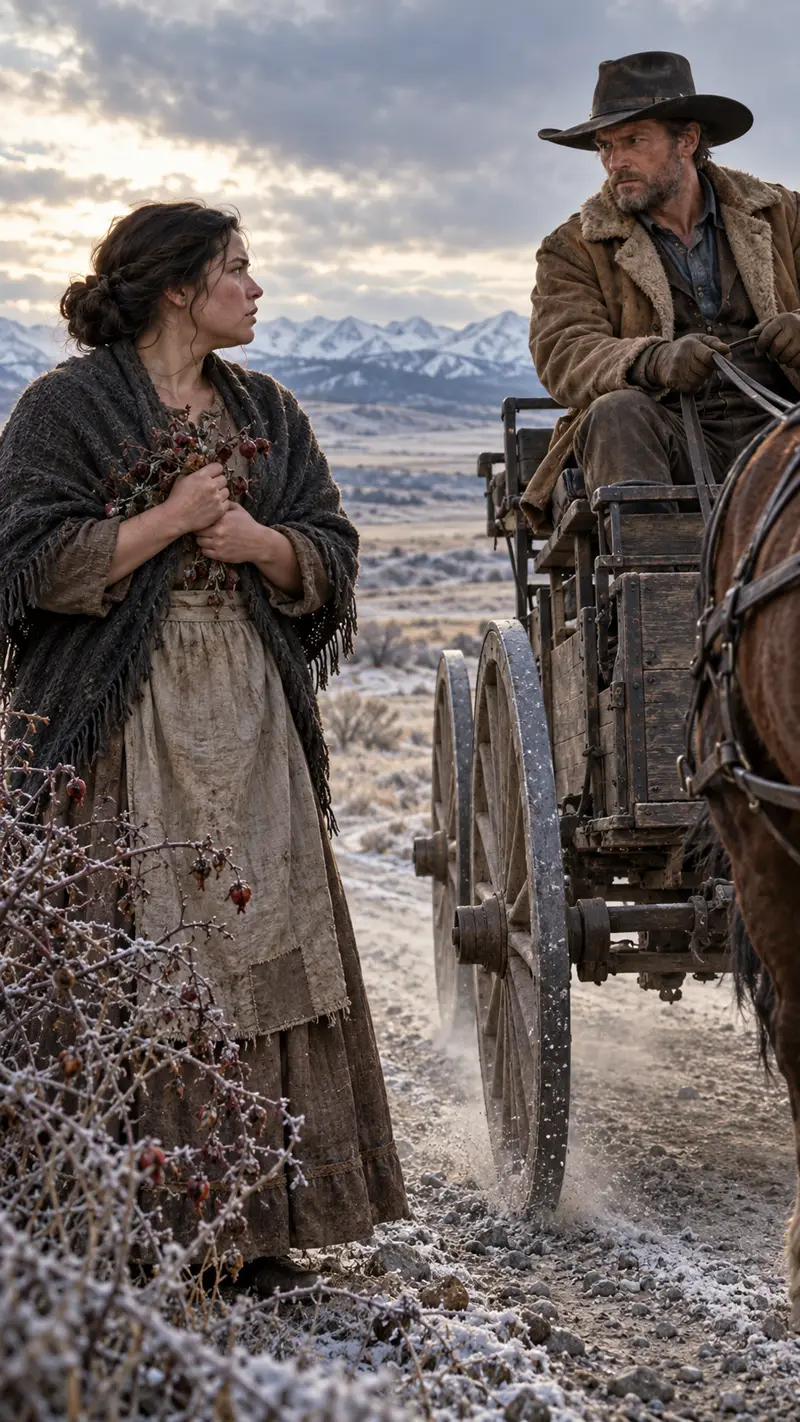
Ada had studied his plain handwriting and sensed that beneath the stern surface lived a man who would never pretend to be someone else. The journey by clattering train and jolting wagon carried her far past the edge of everything she knew. Now, in his secluded cabin, she kept being surprised by the gentleness that governed her husband's life.
Each morning, as dawn touched the granite peaks, Caleb had already rebuilt the fire and set fresh water to boil. He never raised his voice, never banged the cast-iron pots, and never treated a kindness as a debt owed. Whenever the dry factory cough seized her chest, he would quietly put down his tools and carry a chair toward the warmth. He brought her hot water steeped with wild mountain mint and waited until her breathing eased and color came back to her cheeks.
Ada had spent her youth among harsh overseers who treated every ounce of human kindness as an advance payment demanding immediate return. Having never known real consideration without a price, she spent her first weeks on the ridge bracing for the bill. To quiet her anxiety she threw herself into homestead work, scrubbing floors, washing heavy garments, cooking meals. With the record-keeping habits of the factory, she organized the cellar, counted the flour sacks and mended the winter blankets.
Caleb watched her industry with deep admiration and often stepped in to take the heavy water buckets from her hands.
“You don't have to work yourself to exhaustion to earn your place under this roof, Ada,” he told her one afternoon as he stacked firewood. “A marriage isn't a factory ledger where we balance credits against debts until someone falls short.”
His quiet reassurance reached a sheltered corner of her heart. Still, an unspoken sorrow lingered in his eyes at dusk.
Above the rough stone fireplace ran a narrow shelf of dark timber, where Caleb kept a few things he rarely touched. One morning, while he was mending harness leather in the barn, Ada climbed on a stool to dust the high mantel. Hidden behind three tall tallow candles she found a small keepsake box of dark, hand-rubbed mountain walnut. A delicate brass latch held the lid shut, tarnished with age but free of the cobwebs that coated the wood.
Ada hesitated, dusting cloth in hand. A good partner respected the private boundaries of a man who had shown her such grace. Yet the mystery of why so gentle a provider had stayed alone on this high ridge pulled her fingers toward the latch. It gave with a sharp metallic chime that rang through the sunlit cabin.
Inside, on velvet lining, lay a small parcel wrapped in thick, oil-waxed brown paper and tied with braided hemp twine. With hesitant care she undid the neat knot and peeled back the paper until she saw the silver border of a portrait. Her breath caught. Did Caleb hold the memory of a lost love who had died here? And why would a man guarding so intimate a treasure place a newspaper notice to bring a complete stranger into his isolated home?
Before she could turn the stiff paper to see the image, the rapid thud of galloping hooves broke the stillness outside. Ada snapped the walnut box shut and tucked it behind the candles, her heart hammering against her ribs like a trapped bird.
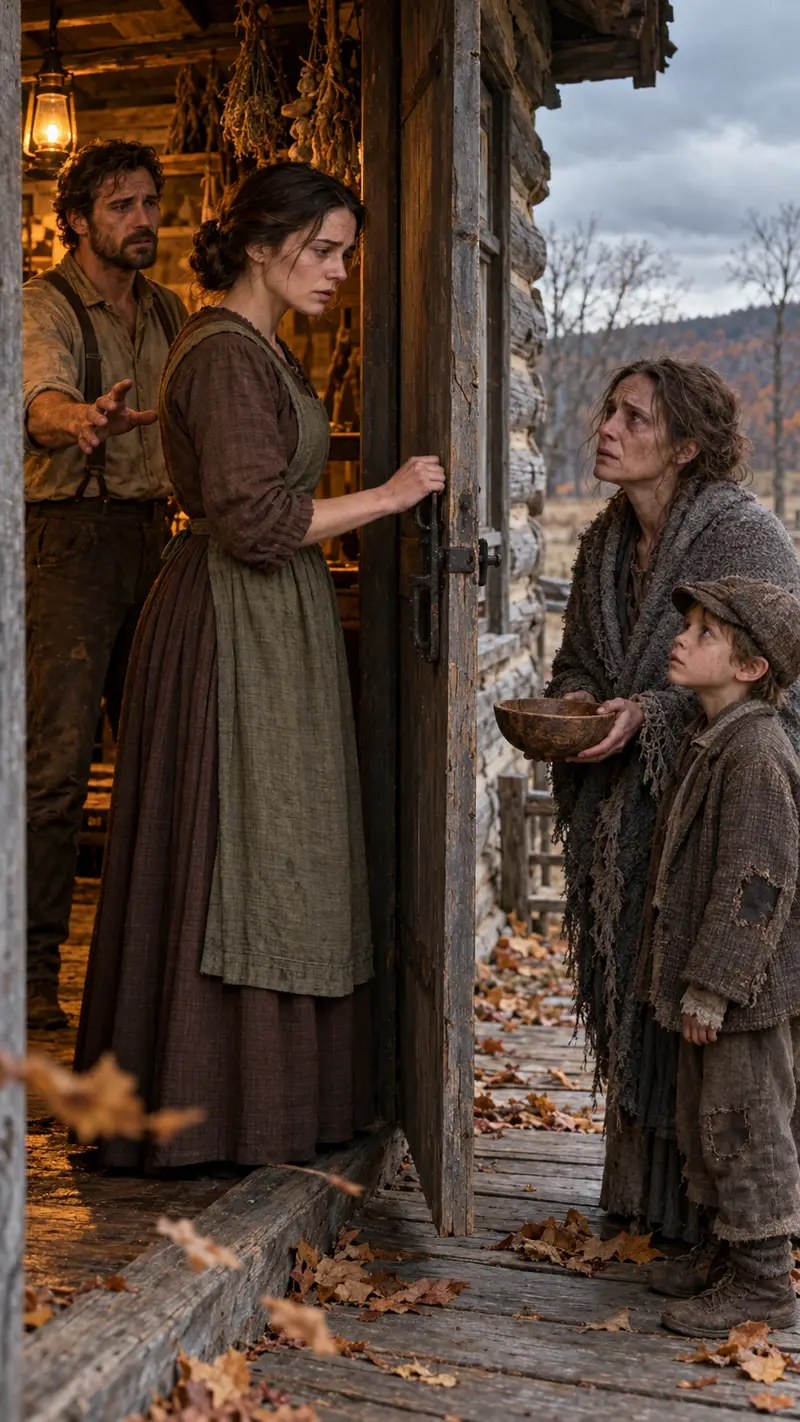
A lathered horse whinnied at the hitching post. Heavy boots crossed the rough porch planks, and three loud, arrogant knocks rattled the cedar door, the knocks of someone used to demanding instant obedience.
Caleb came in through the rear kitchen door from the barn, having already shed his leather apron at the sound of the stranger's approach. One glance at Ada, rigid against the edge of the kitchen table, told him she was frightened.
“Step behind the hearth, Ada,” he said softly, his voice a calm anchor in the sudden tension.
He strode to the entry, lifted the security bar and pulled the heavy door open to the breeze.
Framed against the autumn forest stood Silas Albright, director of the valley timber syndicate and the county's regional claims commissioner. He wore a tailored wool traveling coat, polished riding boots and the condescending grin of a speculator about to seize land. A swirl of mountain wind swept over the threshold, scattering hearth ashes across the floor and making the flames dance.
“A pleasant afternoon to you, Bracken,” he said, in a sharp, nasal voice thick with practiced condescension and polite menace. “I see you're still clinging to this timber ridge as if the territorial courts had forgotten your late brother's debts.”
Caleb gave up not an inch. His broad shoulders filled the doorway and shielded Ada from the visitor's stare.
“State your lawful business plainly, Albright, and be off my ridge before the sun starts down,” he answered coldly.
Albright tapped the stiff leather legal portfolio under his arm, thin lips curling in triumphant cruelty.
“My business is the immediate collection of the five-hundred-dollar mortgage lien your brother Thomas ran up before he passed last spring. Under territorial homestead rules, a single settler can only keep claim to large timber parcels if he heads an established household.” The commissioner craned his neck to peer past Caleb's shoulder at Ada, who stood motionless beside the cast-iron stove. “Word reached the county land office that you meant to dodge the statute by importing a frail mill girl through a newspaper notice. Unless five hundred dollars in gold lands on my desk before sundown tomorrow, this whole parcel reverts to my syndicate.”
The cruel words hit Ada like freezing river water and brought back every humiliation of her Chicago years. She looked at Caleb's rigid back and feared that this sudden disaster would make him see her arrival as a burden too heavy to bear.
But Caleb did not falter. He planted his boots on the threshold with unyielding moral strength.
“This woman is my lawful, cherished wife, and every cedar beam of this house was raised to shelter her with honor. She is neither a convenient pretext nor a tool for your corporate greed, and you will speak her name with respect. Go back to your valley office, Albright, and come at sundown tomorrow to see how an honest mountain homestead answers your threats.”
With a sneer of utter contempt, Albright shoved an official document bearing a raised scarlet territorial seal into Caleb's hand.
“Sundown tomorrow, Bracken, or I come back with the county magistrate and nail an eviction notice to your precious front door.”
He mounted his bay, wheeled the horse hard and galloped down the rocky trail in a cloud of dust. Caleb shut the heavy door, dropped the bar into place and rested his forehead against the wood.
Ada crossed the wide pine floor, her steps quiet but sure, and reached up to the high mantel. She took down the dark walnut box, carried it across the room and set it squarely in the middle of the kitchen table.
“Caleb,” she said, in a clear, steady voice that cut through the fog of his despair. “I opened this box earlier today. I think it's time you told me what sorrow you've been carrying alone.”
He raised his head. His gray eyes shone with a vulnerable tenderness that made her heart ache. He walked slowly to the table, sat on the rough bench and carefully folded back the remaining layers of wax paper.
Under the paper lay an antique tintype of a tired, gentle-faced woman in a plain apron standing beside a younger, boyish Caleb. Next to it were a heavy canvas drawstring pouch and a stamped, unused one-way passenger ticket on the Union Pacific Railroad.
“That's my mother, Eleanor,” he said softly, in a deep voice trembling with grief kept silent for decades. “She spent eighteen bitter years in a Massachusetts textile mill, breathing cotton lint until her spirit and her strength were broken. Whenever coughing fits brought her down, the overseers reminded her that a hundred hungry women were waiting for her job. When she died in that freezing attic room, she didn't leave enough coins for a plain pine coffin.”
Silent tears ran down Ada's cheeks as she listened to the story of a woman whose trials so closely mirrored her own.
“I made a solemn vow,” Caleb went on, “that if I ever built a homestead here, no woman under my protection would feel trapped or helpless.”
He reached out with his rough hands and slid the canvas pouch and the rail ticket across the table to rest in front of her.
“There are five hundred dollars in solid gold in that pouch, saved cent by cent so you would always have a real choice. I placed that notice hoping to offer someone the clean air and safety my mother never had, not to bind a servant. I wouldn't touch that gold to pay Albright. I refused to spend the price of your freedom, even to save this land.”
Ada gazed at the gleaming coins and the railroad ticket and suddenly understood the deep nobility behind his gentle distance on their wedding night. He had slept on a bench so she would never feel she had to barter her dignity.
A wave of fierce devotion rose through her chest, washing away every lingering doubt and turning her mind toward the battle ahead. She did not reach for the money or the ticket. She drew Albright's official repossession notice into the bright circle of lamplight.
In her nine hard years in Chicago she had done more than repair machinery. She had also audited the bookkeeping ledgers for the mill owners. She knew exactly how dishonest clerks hid illegal penalties, padded interest and concealed credits to manufacture false debts.
“Caleb,” she said, her voice ringing with authority as her sharp eyes ran down the handwritten figures in Albright's statement. “Did your brother Thomas deliver timber to Albright's valley sawmill in the autumn before he fell ill last year?”
“Thomas hauled sixty cords of seasoned yellow pine to the mill. Albright claimed the delivery receipts were lost in transit,” Caleb confirmed.
Ada fetched an ink pen and a fresh sheet of paper and worked the sums with the swift, flawless precision of a master accountant.
“Albright charged a compound penalty of forty-five percent, which the Revised Territorial Banking Statutes outlawed two years ago. And he hid Thomas's delivery receipts, which are three hundred dollars of timber value legally credited against the original loan.” She looked up from the figures, eyes blazing with the fierce pride of a woman who had finally reclaimed her strength. “You don't owe that syndicate five hundred dollars, Caleb. By territorial law, Silas Albright owes this homestead forty-two dollars in overpayment.”
At sundown the next day Silas Albright rode up the mountain trail with County Magistrate Hiram Holloway following in a formal black carriage. The timber boss dismounted with arrogant certainty and held out his palm toward the porch, a triumphant sneer on his face.
“The sun has touched the timberline, Bracken. Hand over the five hundred in gold or clear off these premises without further delay.”
Before Caleb could speak, Ada stepped calmly onto the porch steps with the territorial statute book and her carefully verified accounting statements. With unyielding dignity she handed the audited balance sheets to Judge Holloway and explained every fraudulent interest charge and hidden timber credit.
The judge studied the papers thoroughly. His weathered face darkened with indignation as he recognized the blatant deception Albright had attempted.
“Mr. Albright, this young woman's audit is mathematically flawless, and it exposes a shameful fraud against territorial law,” Holloway declared with booming finality. “This court finds the mortgage fully satisfied, voids your lien, and orders your syndicate to pay forty-two dollars to this family by Friday.”
Albright went white with humiliation, sputtered in fury and spurred his horse down the mountain path in disgrace. Judge Holloway touched his hat to Ada in deep respect, warmly congratulated the homesteaders and turned his carriage back toward town.
In the quiet evening light, Caleb turned to his bride and looked at her with a breathless wonder that brought tears to his eyes.
“You defended our home, Ada, and you lifted a sorrow I've carried in silence for more than twenty years,” he whispered.
Ada went into the cabin, took the unused train ticket from the table and laid it across the glowing hearth embers.
“I've no need of a ticket to an empty city, Caleb. My home is right here beside the man who honors me.”
His strong arms folded gently around her before the dancing firelight, and Ada rested her head on his shoulder in complete and lasting peace.