The whole valley laughed when a lonely woman dug a mud pit on land nobody wanted. None of them guessed that what lay buried under the clay would change their lives for good.
Late-afternoon sun poured amber light across the Wyoming basin as Nellie Sloane sank her spade into the gray ground. Each scoop of clay chewed at her palms, but she held on to the wooden handle and kept digging.
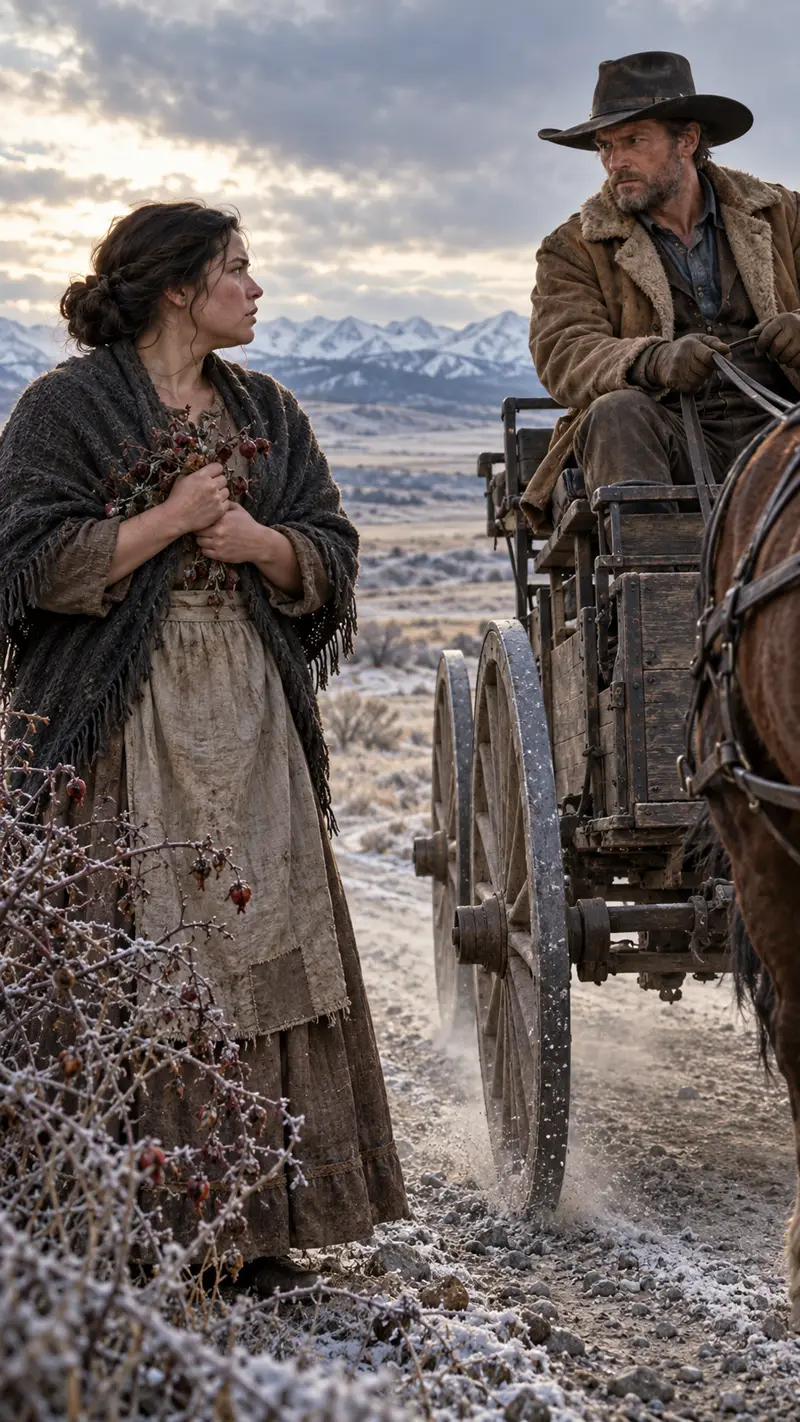
For a week, wagons had creaked along the road below the ridge, and more than one homesteader had reined in his team to jeer at her. To practical farmers racing the short mountain summer, wasting daylight on a pit in barren silt looked like plain madness. They had come west to grow winter wheat, to lay straight furrows across the rolling prairie before the early frosts. Nellie, by contrast, had inherited forty neglected acres, an empty cabin, and a shallow hollow that collected alkaline runoff in the spring storms.
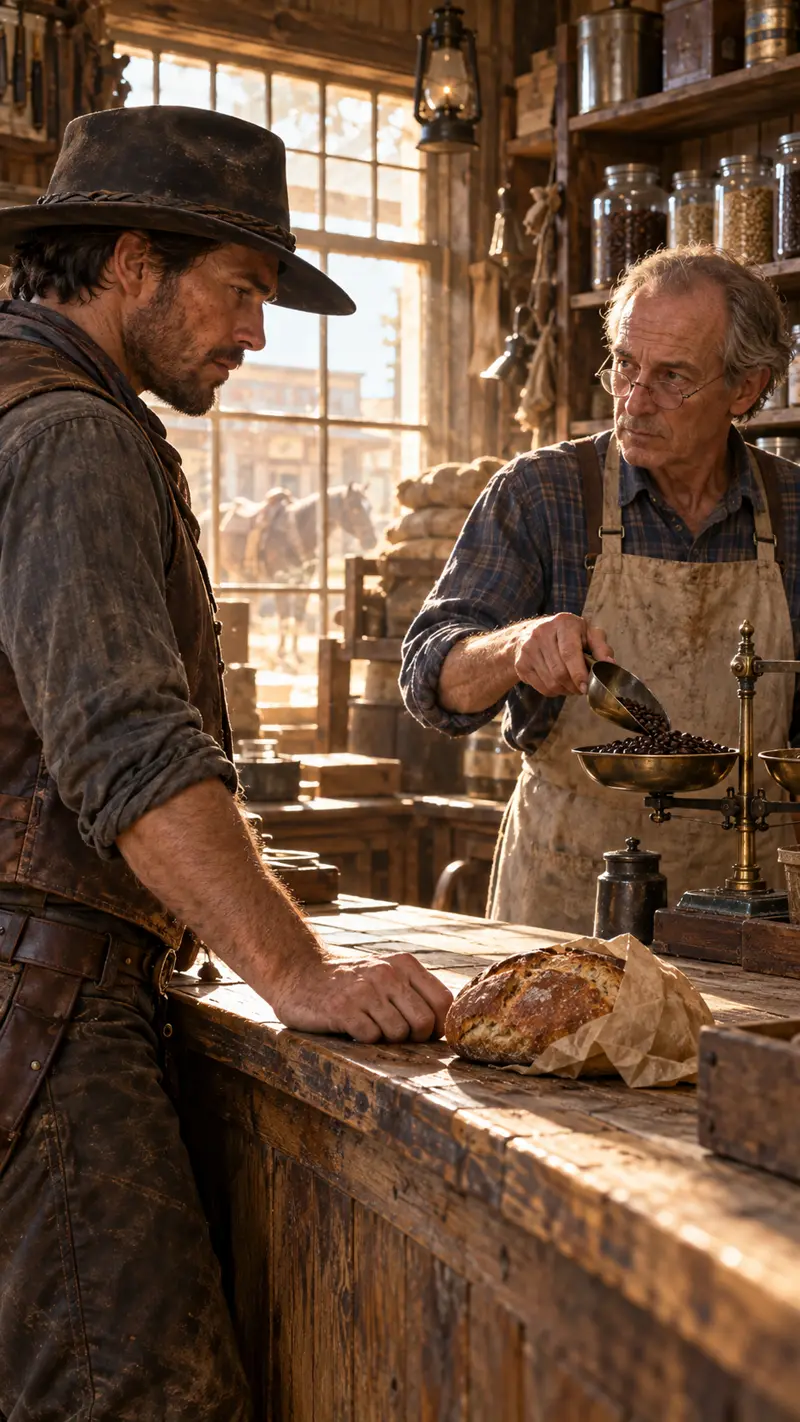
At the mercantile in Grover's Crossing, the dry-goods clerk had smirked when she traded her mother's silver thimble for fence pickets. Even the weathered cattlemen who had survived twenty winters warned her that this stubborn soil had no sweetness in it and no nourishment. But none of the mockers had crouched at dawn, as she had, to study the delicate three-toed tracks pressed into the damp silt. Those small prints told her that wild mallards were crossing the dry plains, looking for a quiet place to rest.
Now the western sky caught fire in copper, and a low rustle stirred the thin evening air above the hills. Nellie let the spade fall and straightened her aching back. She held her breath as the whistle of wings grew and filled the sky.
A dozen green-headed mallards slid down through the dusk, golden underwings flashing in the last light, and circled her humble pool. On the wagon road, Silas Greeley pulled his sorrel to a stop, and the amused grin slid off his face as the flock came down. The birds splashed gently onto the shallow water, sending ripples across the clay banks she had spent days shaping.
Nellie had barely begun to savor her small victory when the soggy bottom of the trench heaved. A patch of submerged earth caved inward, swirling silt through the water, and under it showed the hard edge of a squared wooden beam.
Silas vaulted out of the saddle and scrambled down the slope, spurred boots skidding, one palm raised. "Nellie, get away from that pit before the bank gives way under you!"
She did not retreat. She knelt in the cold water instead and scraped the sticky clay from the dark timbers. Her fingers found metal bands and heavy brass rivets, the kind no creek current could ever have left behind. Silas stopped at the muddy rim, and the color drained from his weathered face as he made out the carved maker's mark.
"That ironwork belonged to old Thomas Mercer," he whispered. "The surveyor who vanished from this valley nine years ago."
Every child in the county knew the gossip about Mercer, a quiet man accused of running off with the irrigation treasury. The rich ranchers of Grover's Crossing swore he had fled east, leaving the community with no canal money. Yet here, under three feet of supposedly worthless clay on Mercer's abandoned claim, lay a heavy trunk sealed with tar.
Silas bent down with his iron pry-bar, knuckles white, and worked the steel under the lid. The seasoned spruce gave way with a wet groan, and the old chest opened onto three layers of wax-dipped canvas. There was no stolen gold inside. There was a brass surveyor's transit, a forged iron key, and a thick leather ledger.
Nellie lifted the book carefully, brushed a few dry pine needles off its marbled covers, and opened the first page. The bold signature of Thomas Mercer headed the entry, dated three days before he disappeared in the autumn of 1878. "If an honest hand unearths this testimony, let them know that the drought threatening our valley was engineered by greed rather than heaven."
Silas crowded in and held his lantern high, so its yellow light fell across page after page of intricate drawings. Mercer had spent five years mapping the hidden water beneath the basin, tracing the deep aquifers that fed the western prairie. His surveys showed an immense spring flowing directly under Nellie's modest plot, held back and waiting for artesian pressure to release it. By his logs, that spring had once kept the seasonal creek running all year and turned the lower valley into green meadow.
The maps showed something else, too: a deliberate network of pine cribbing and stone dams built two miles north in the canyon. Someone had systematically plugged the underground fissures, forcing the water table down and turning fertile homesteads into dust.
Nellie turned to the last entry, where Mercer described his confrontation with Harlan Vance, the richest landowner in the district. Vance had secretly paid for the timber damming, planning to bankrupt the small farmers and buy up their land grants. When Mercer refused to falsify his official survey to hide the diversion, Vance drove him into exile with slander. Mercer had buried his instruments and field books where only a person digging for water would ever look, deep beneath the heavy clay.
Silas sank onto a weathered boulder, his calloused hands shaking as he stared at the careful figures in the dim light. "My father sold our herd that terrible winter," he muttered, "because Vance told everybody the underground water had dried up for good."
Nellie rested her hand on the tarnished brass transit and felt the cold weight of the truth Mercer had left here. "Your father didn't fail his land, Silas," she said softly. "Neither did all the families driven off by dust and debt."
Silas looked toward the dark road to Grover's Crossing, where Vance's grand white manor stood against the foothills. "Vance has the county court in his pocket," he warned. "He'll never let this ledger see daylight in town."
"The truth doesn't need a dishonest court's permission," Nellie answered, "not when every farmer in this valley is desperate for water."
Under the stars, they examined the heavy forged key that Mercer had lashed to the inner spine of the book. According to the diagrams, it opened an iron floodgate hidden in a stone culvert under her basin. By digging her duck pond, Nellie had unknowingly scraped away the clay seal Mercer packed over the masonry valve.
All through the cool prairie night, the two worked side by side in the lantern glow, clearing gravel from mossy stones. The wild ducks dozed along the south rim of the pond, untroubled by the scrape of spades on bedrock. At last, as the sky paled to silver, Nellie's shovel rang against an iron plate guarding the valve. The cover bore the stamp of the United States Territorial Land Office, undisturbed since the day Mercer locked it. Silas fitted the heavy key into the square keyway and eased it against the rusted tumblers until the latch gave.
They never got the chance to turn the wheel. The drumming of many hooves rose from the direction of town, carried on the dawn chill. Harlan Vance rode at the head of five riders, his fine wool coat buttoned against the morning breeze. Behind him came two town aldermen and the circuit judge, all pinched and sour from the early summons.
Vance drew rein at the boundary fence and looked down at Nellie's muddy boots and soiled apron with cold contempt. "Miss Sloane, complaints have reached my desk about an unauthorized excavation that threatens the public drainage easement."
Nellie stood her ground at the water's edge, one clay-smeared hand on the handle of her spade. "This basin lies squarely within the forty acres granted to me under federal patent, Mr. Vance," she said calmly.
He laughed thinly and gestured at the judge with a silver-tipped riding crop that flashed in the first sunlight. "A homestead patent requires agricultural improvement, and you've spent your season building an eyesore fit only for stray birds." He pulled a folded legal notice from his coat and held it up for the gathering neighbors to see. "Under territorial statute, land left uncultivated and diverted into stagnant mud pits reverts to the valley development trust."
Several ranchers who had ridden in behind the aldermen began to mutter, uneasy at how harsh the demand was. Silas climbed up out of the hollow, wiping gray silt from his forehead, and faced the wealthy cattleman without flinching.
"Nellie hasn't wasted this land, Harlan. She's uncovered what you spent nine years trying to bury."
Vance's smug look tightened as Silas raised the brass transit, its polished level vials gleaming in the dawn. A murmur of shock rolled through the homesteaders as older men recognized the brass instrument of their lost surveyor. Nellie stepped forward holding Mercer's open ledger in both hands, so the nearest councilman could read the territorial stamps.
"Thomas Mercer never stole your irrigation money, neighbors," she said clearly. "He mapped the spring that Vance stole from every family here."
The judge leaned down from his horse, spectacles catching the detailed diagrams and notarized affidavits on the pages. "This is Mercer's personal seal," he murmured, "registered with the territorial governor in Cheyenne before the great drought of seventy-eight."
Nellie turned to the surveyor's final balance sheet, which listed the exact deposit numbers where the community funds were hidden. The money had never left the valley. Vance had quietly moved the whole account into his private firm under an assumed name.
A gasp ran through the crowd, and years of resentment toward Mercer collapsed into fury at Vance. One elderly farmer, whose wheat had withered three years running, shouted, "We nearly starved while you sat on our water!"
Vance's face darkened into a mask of desperation. He yanked his reins and turned to the magistrate for help. "These are the raving scribbles of a discredited lunatic!" he stammered. "Completely inadmissible without certification from the state land commission."
Nellie looked down at the iron wheel under her boots, then up at the anxious faces of the working families lining the road. "We don't need to wait for Cheyenne," she called out, "to verify what the earth itself is ready to prove today."
She nodded to Silas. He bent his powerful shoulders over the key and threw his full weight against it. With a deep metallic clatter that shook the bedrock, the ancient sluice gate turned in its underground housing.
For three breathless heartbeats, silence lay over the valley, and every eye stayed on the bubbling gray clay.
Then a muffled roar rose from deep in the dry earth, like spring thunder rolling through a mountain pass. The center of Nellie's modest pond surged upward in a column of sparkling, icy water that shattered the crust. Pure artesian water, held prisoner for nearly ten years behind Vance's illegal timber barricades, burst into the morning air like a fountain. It poured across the widened basin, filled its gentle slopes in minutes, and spilled joyfully into the parched creek. The dry streambed became a foaming torrent of clear water racing south toward the thirsty pastures.
Children in the wagons cheered and flung their felt hats skyward as cool spray drifted over them. Grown men who had not seen running water on their land since boyhood sank to their knees and let the overflow soak their hands.
Vance tried to back his rearing horse away from the rising water, but the ranchers closed around him in a solid wall of judgment. The circuit judge shut Mercer's ledger with solemn deliberation and fixed the trembling land baron with a cold, unyielding stare. "Harlan Vance, you will come with me to the county seat at once to answer for fraud, falsification, and unlawful diversion of water."
Without another word, the two aldermen took the reins of Vance's mount and led him off beneath the silent contempt of his neighbors.
When the officials had vanished over the northern ridge, the homesteaders turned back to the hollow where Nellie stood soaked in the morning spray. The dry-goods merchant from Grover's Crossing came forward with his eyes cast down in genuine shame and reached for her dripping hand. "Miss Sloane," he whispered, "we called you a fool for digging in this mud. You were the only one with eyes clear enough to see."
One by one, the neighbors who had mocked her from their wagons came down the slope with apologies and willing hands. They brought draft teams and heavy timber slips and spent the day shoring up the banks of her magnificent new reservoir. By midday the stagnant pit had become a wide blue pond that mirrored the snowy peaks like polished glass. The ducks that had first guided her instinct returned by the dozens, gliding along new reeds that sprouted through the clay.
News spread across the territory like a prairie fire, and settlers who had given up in despair came back to claim the fertile soil they had abandoned. Before summer ended, the restored creek was nourishing hundreds of acres of grain and green alfalfa. The territorial legislature cleared Thomas Mercer's name, and his portrait, restored, hung with honor in the Grover's Crossing courthouse. The irrigation treasury, recovered from Vance's frozen assets, paid for permanent stone channels so that every smallholder had water.
For all the bustle and prosperity in the valley, Nellie's homestead stayed a place of quiet peace. She never plowed under the pond to plant cash crops. She kept her promise to the wild creatures that had pointed the way. Silas came by each evening after working his cattle, bringing timber and tools to help her mend the cabin and raise a sturdy barn.
On a warm evening in late September, the first dusting of autumn snow appeared on the high granite ridges. Nellie sat on the cedar bench Silas had built by the water, watching hundreds of migrating waterfowl gather for their trip south. Silas walked down from the barn with two tin cups of hot chicory coffee and sat beside her on the smooth pine planks.
"In town they're calling this place Sloane's Sanctuary," he said with a soft smile, "though some of the old-timers still say Nellie's Pond."
She took the warm cup, her heart full, and watched the silver ripples shine under the first stars. "The land always knows what it wants to become," she said gently, "if a person is patient enough to read the signs."
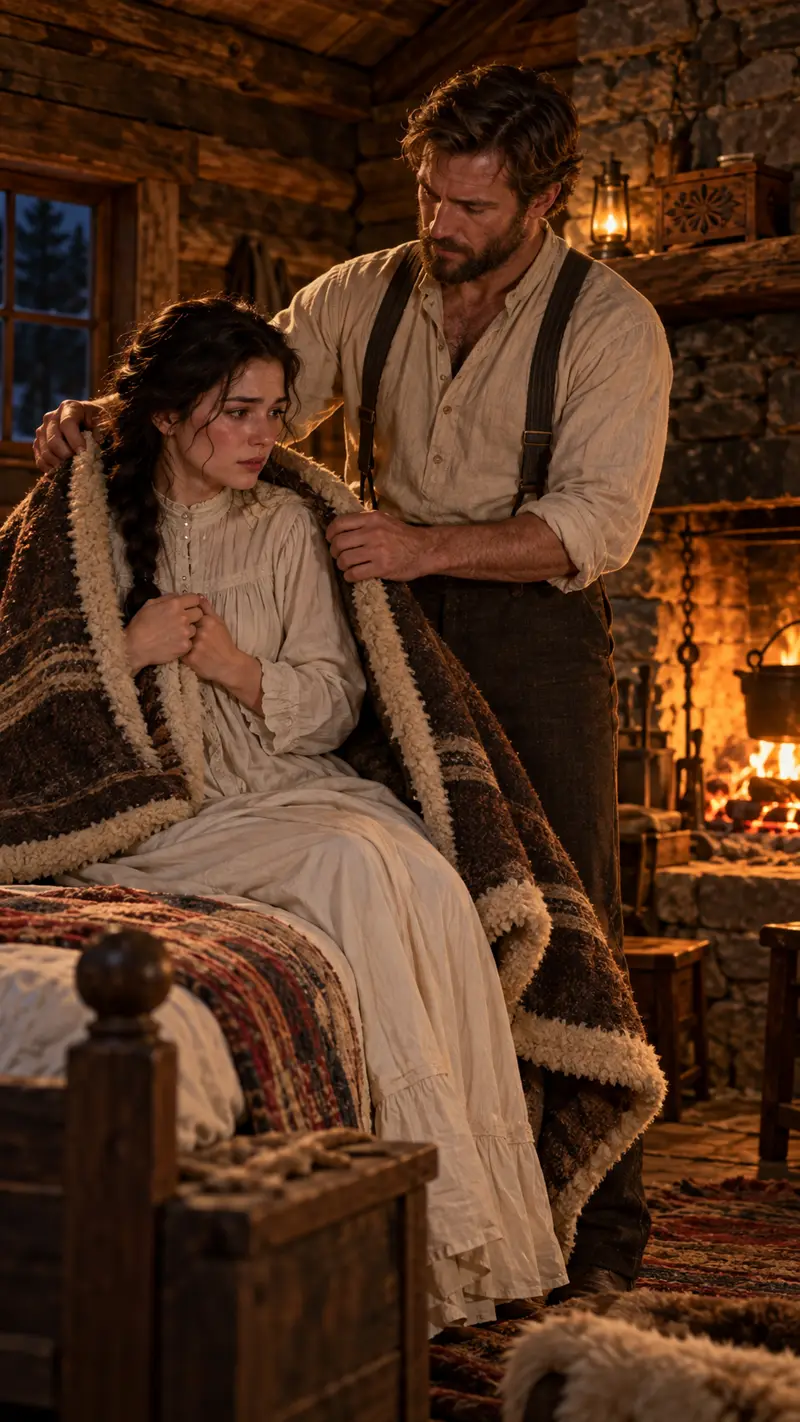
Silas set his cup aside and reached across the space between them, his rough fingers closing around her capable, weathered hand. "I think the land was just waiting for someone brave enough to believe in it when everyone else had walked away."
Nellie leaned her shoulder against his and felt the quiet strength of a partnership built on honest labor and shared redemption. Out on the still water, a mother mallard led her brood in a gentle arc toward the cattails. The cool mountain wind rustled the tall grass and carried the sweet smell of damp earth and new beginnings over the prairie.
She had come to this forgotten valley with forty dollars, a borrowed mule, and a battered iron shovel. From one humble mud pit had sprung life, justice, and a community held together by the promise of truth. Nellie closed her eyes for a moment and whispered a blessing of thanks to the wild wings that had shown her the way. As night settled over the Wyoming range, the soft lap of water on the shore sounded like the heartbeat of a healed land.